OutlookDataExplainers
How our Outlook works
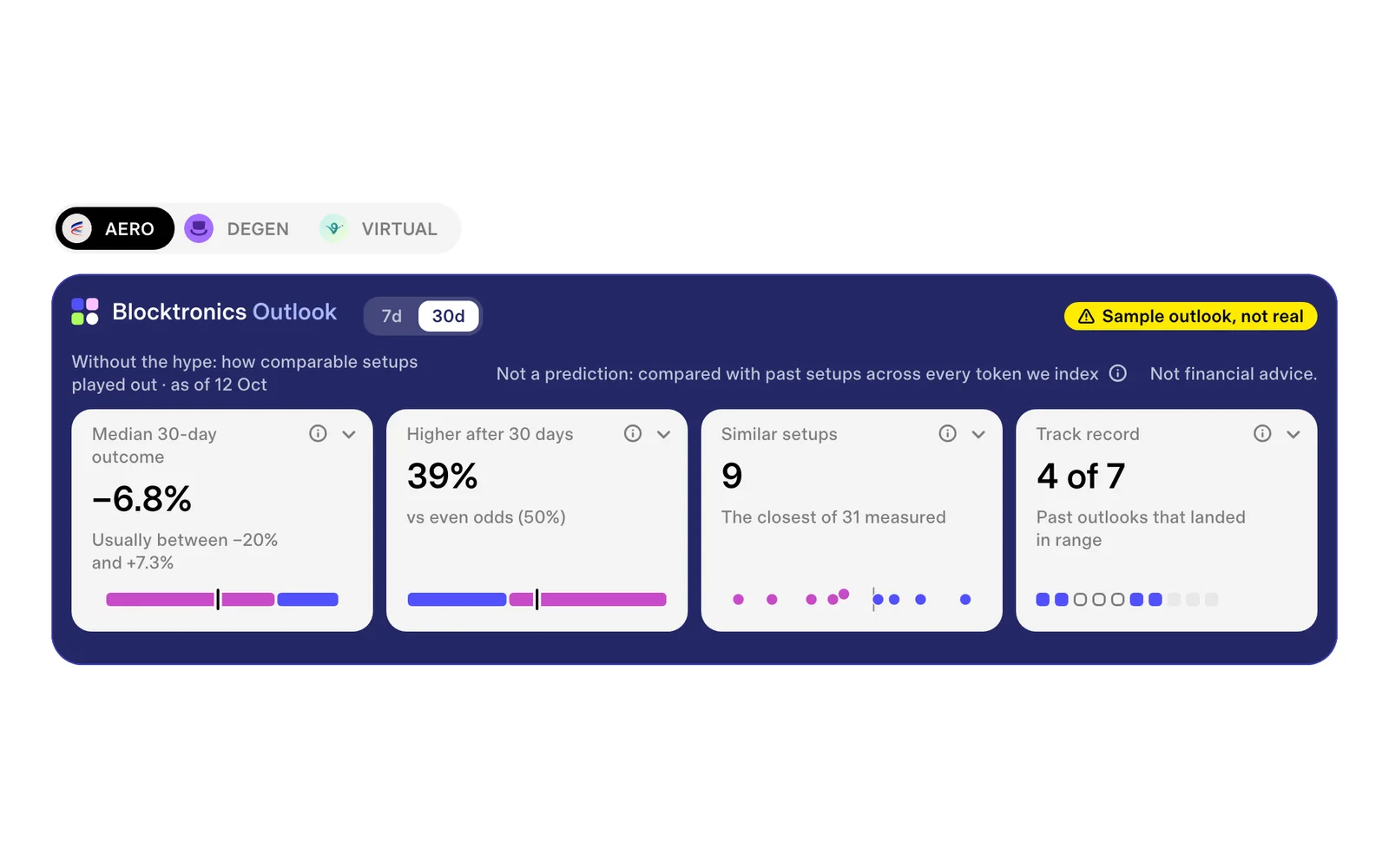
The Outlook shows how setups like a token's today played out before, at 7, 30 and 90 days. What it reads, what it leaves out, and why it is never a promise.
3 min readRead it
"Smart money" lumps bots, market makers, insiders and pro traders into one word. What Blocktronics shows today, one flagged cohort, and the split that's coming.
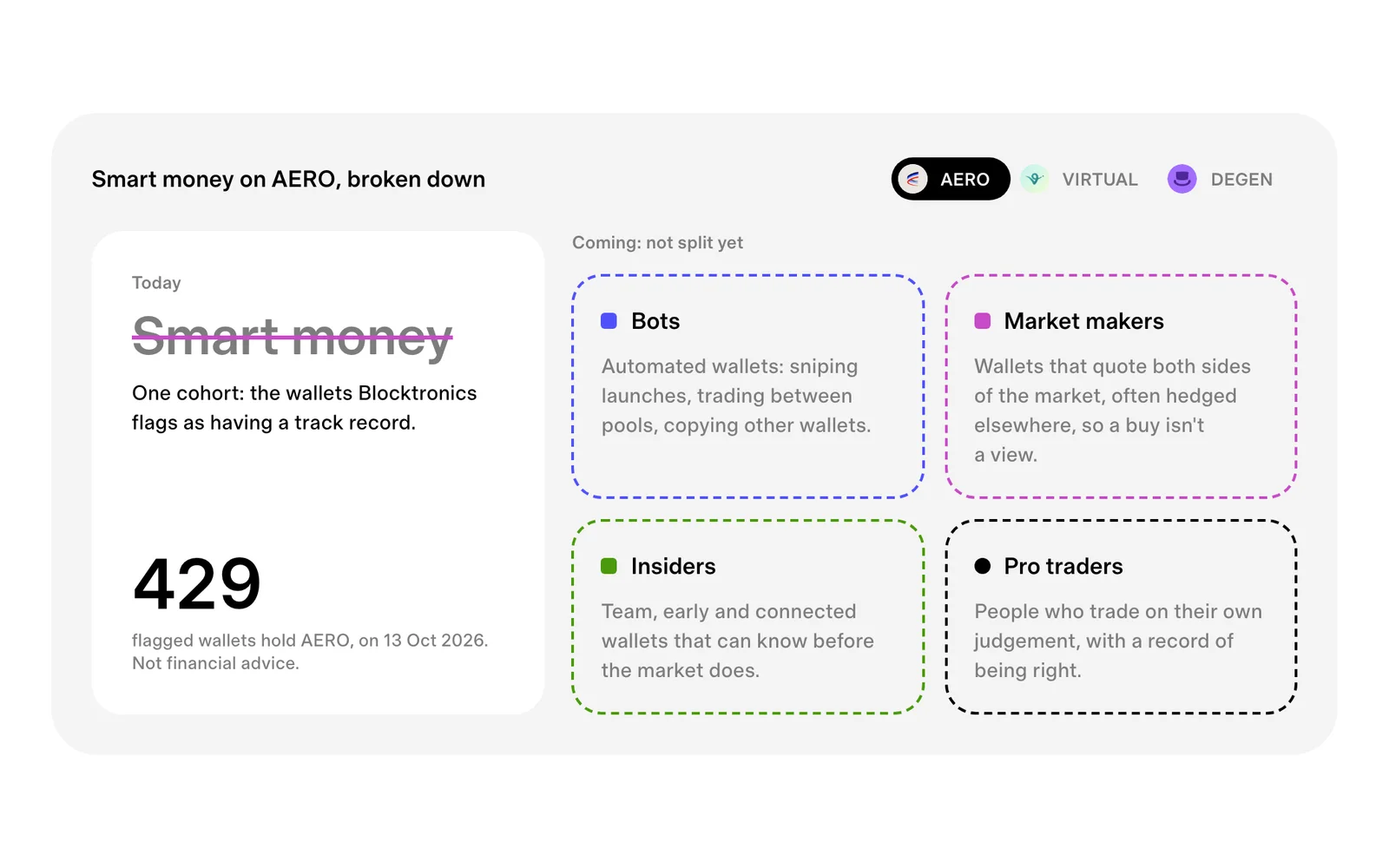
"Smart money" is the phrase everyone uses, and it hides more than it shows. The wallets behind it aren't one kind of trader.
One cohort: the wallets Blocktronics flags as having a track record.
Reading…
Look closely at any group of wallets with a good record and you find at least four kinds of trader.
Put them in one bucket and their moves cancel and blur. A market maker's hedged buy looks the same as a pro trader's conviction.
Today smart money on Blocktronics is one cohort: the wallets the Blocktronics backend flags as having a track record. Size alone doesn't get a wallet in: a big account adding to a token isn't smart money because it's big. How wallets are chosen stays the backend's, and the principles are on Learn.
The cohort's buying and selling, and what it holds, are on every token:
Use the Blocktronics MCP. Call token_series for AERO on Base with metrics ["smart_wallets", "smart_netflow_usd"], days 30 and format "rows". Tell me how many flagged wallets held it on the latest day, and whether they bought or sold on net over the month.
Following smart money as one number is useful, and it is also where most of the confusion comes from. Lessons drawn from the whole cohort mix a hedged market maker with a person who bet on the token, and a launch-sniping bot with an insider who knew the team.
The question people really ask is narrower: what are the people who trade well, by their own judgement, doing? That needs the cohort split.
The split: the same flagged wallets broken into bots, market makers, insiders and pro traders, each with its own flows and holdings. It is being planned with the backend now.
Until it ships there is no data for the four, so the picture at the top shows them as empty outlines, with no numbers. We won't draw a split we haven't measured.
Use the Blocktronics MCP. Call explain_metric for smart_money. Tell me what the flagged cohort is today, what it isn't, and what I should keep in mind before reading its flows as a signal.
Your agent reads the same cohort through the Blocktronics MCP. Connect it from the MCP page.
token_seriesMCP tool · Token daily seriesTidy daily series for one token, or up to 5 at once (a list in `token`: each token is its own pull, 2 credits each), over the days Blocktronics stores for it (UTC; 60 today): the most recent `days`, or a span from `from` to `to` (ISO days) inside them.{
"token": "AERO",
"chain": "base",
"metrics": [
"smart_wallets",
"smart_netflow_usd"
],
"days": 7,
"format": "rows"
}{}Each row is one day.
One word, four kinds of trader. The data should say which.
Every figure in this article is read live from Blocktronics' public data and carries its day; code numbers come from the code itself
Every token Blocktronics covers works the same way, and none of it needs an account
The Outlook shows how setups like a token's today played out before, at 7, 30 and 90 days. What it reads, what it leaves out, and why it is never a promise.
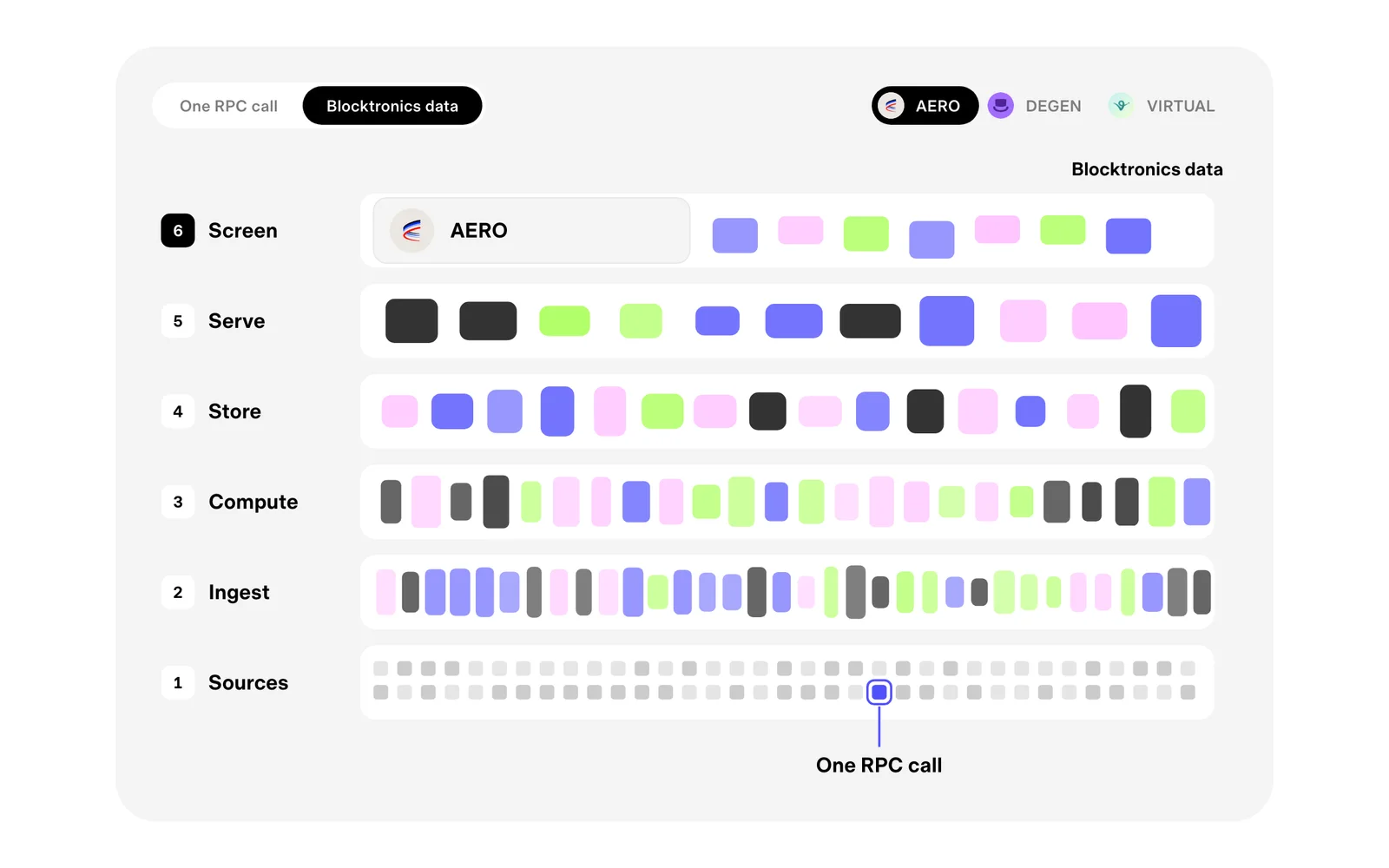
An RPC call asks the chain one question about one moment. Blocktronics data is what you get when a great many answers are put together, kept and read for you.

How Blocktronics draws a token's holders as a tank of fish, rule by rule, and how to build your own with your AI agent and the Blocktronics MCP.