OutlookDataExplainers
How our Outlook works
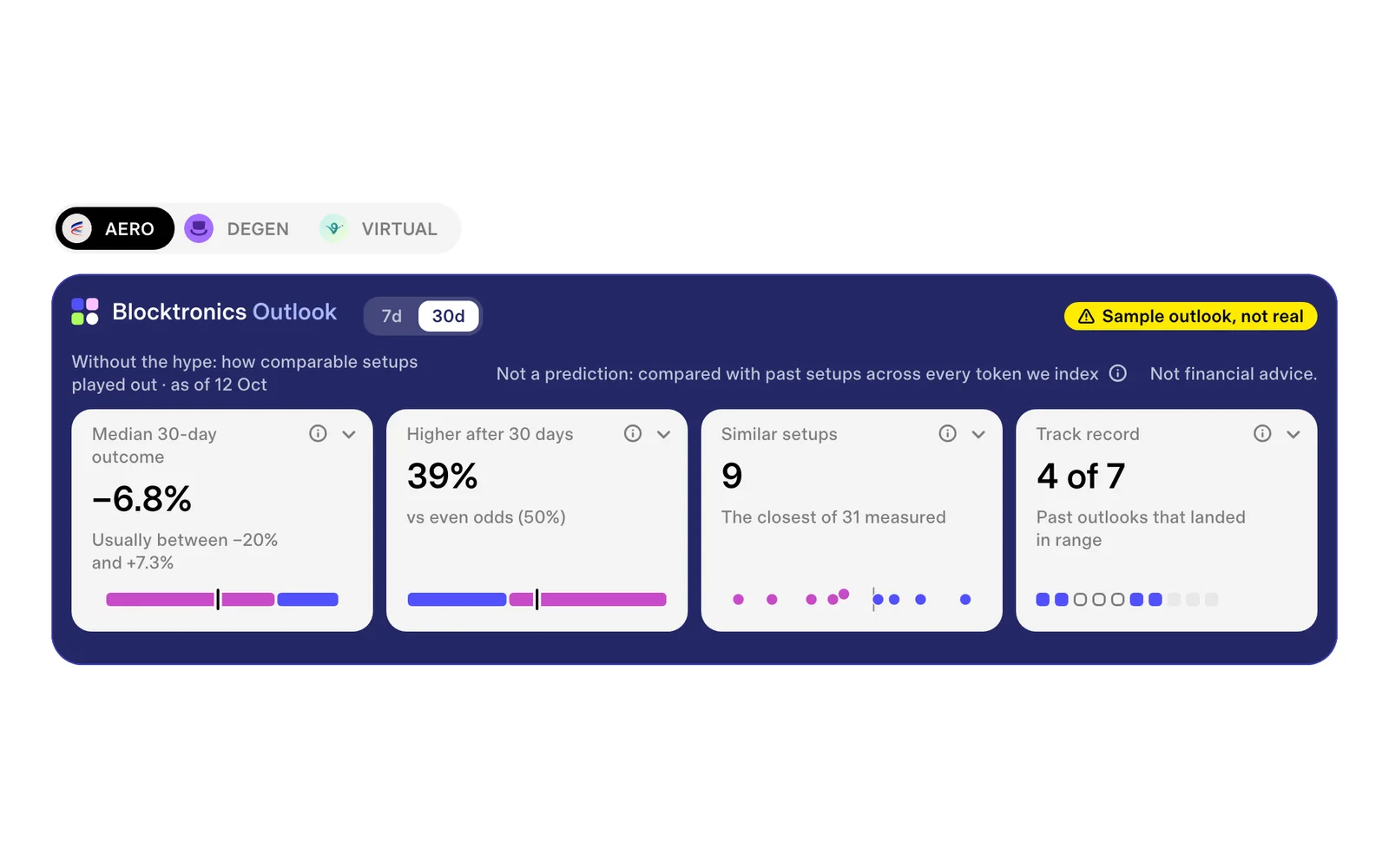
The Outlook shows how setups like a token's today played out before, at 7, 30 and 90 days. What it reads, what it leaves out, and why it is never a promise.
3 min readRead it
An RPC call asks the chain one question about one moment. Blocktronics data is what you get when a great many answers are put together, kept and read for you.
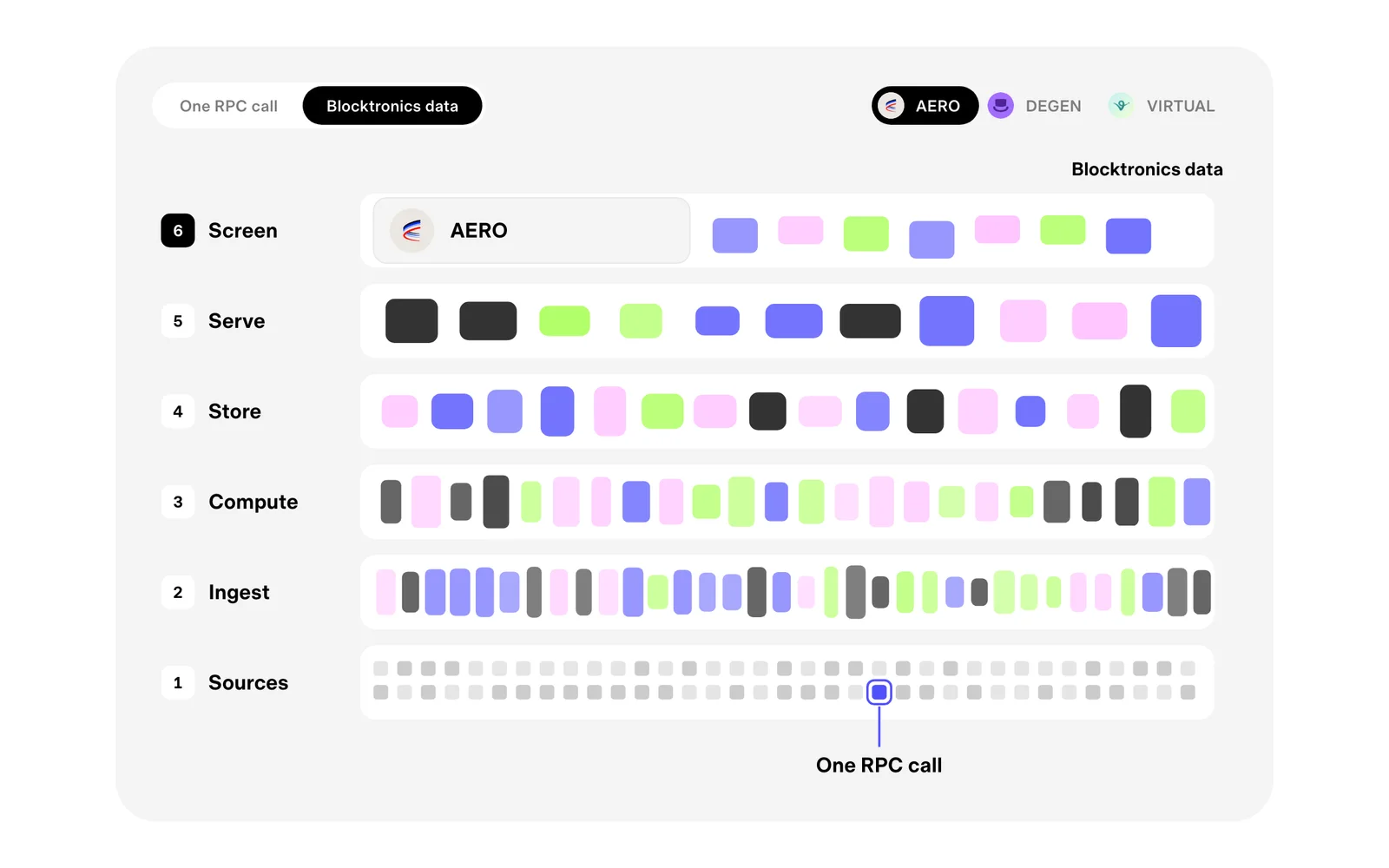
An RPC call is how an app talks to a blockchain. Blocktronics data starts from answers like that, and then does a great deal more with them.
RPC stands for remote procedure call. A wallet or an app sends a node one question and gets one exact answer back: what does this wallet own right now, what happened in this block, what does this contract say?
Each answer is true, but it is about one address at one moment. It can't tell you who owns a token, whether that is changing, or what the people buying it paid. For that you would need a mountain of calls, and then the work of making sense of them.
In plain words: what does a single RPC call to a blockchain node return, and what can't it tell me about a token on its own?
The small lit square at the bottom is one RPC call. Everything above it is what Blocktronics adds, in six layers from the chain to your screen. Press One RPC call to see how little of the picture a single answer is.
How each layer does its work is ours to keep: that work is what makes the data worth reading. What matters to you is what comes out at the top.
A token read the same way every day, with every figure dated and every gap left as a gap. One RPC call can show you one trade. This card is a month of buying and selling on decentralized exchanges, in dollars, day by day.
Every token Blocktronics covers has the same cards, on the same footing, so two tokens can sit side by side and mean the same thing.
An RPC call is one fact. Blocktronics data is the whole token, read for you.
Your agent can read the same data through the Blocktronics MCP, without an account or a key. Connect it from the MCP page, then ask.
token_overviewMCP tool · Token overviewOne-call summary of a token: the A–E grade with its six pillar scores and reasons, KPIs with their change over the 60-day window (holders by size, cohorts, MVRV and cost basis, top-10 concentration, supply in profit, DEX netflow, volume, sellers' realized PnL, smart money), today so far, and a short plain-language reading built only from those numbers.{
"token": "AERO",
"chain": "base"
}{}Use the Blocktronics MCP. Call token_overview for AERO on Base. Then tell me which parts of the answer one RPC call could have given me, and which it couldn't.
Every figure in this article is read live from Blocktronics' public data and carries its day; code numbers come from the code itself
Every token Blocktronics covers works the same way, and none of it needs an account
The Outlook shows how setups like a token's today played out before, at 7, 30 and 90 days. What it reads, what it leaves out, and why it is never a promise.
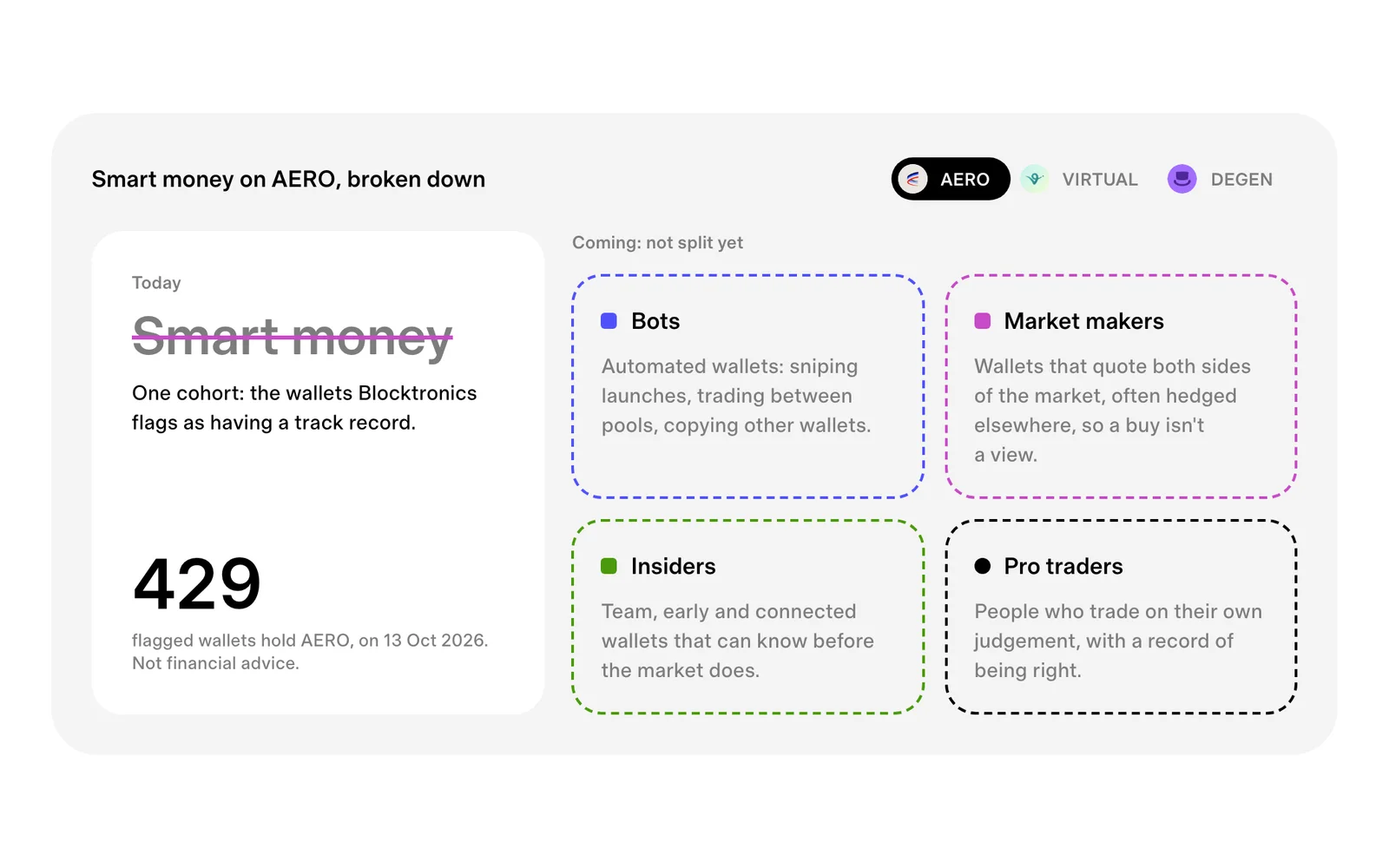
"Smart money" lumps bots, market makers, insiders and pro traders into one word. What Blocktronics shows today, one flagged cohort, and the split that's coming.
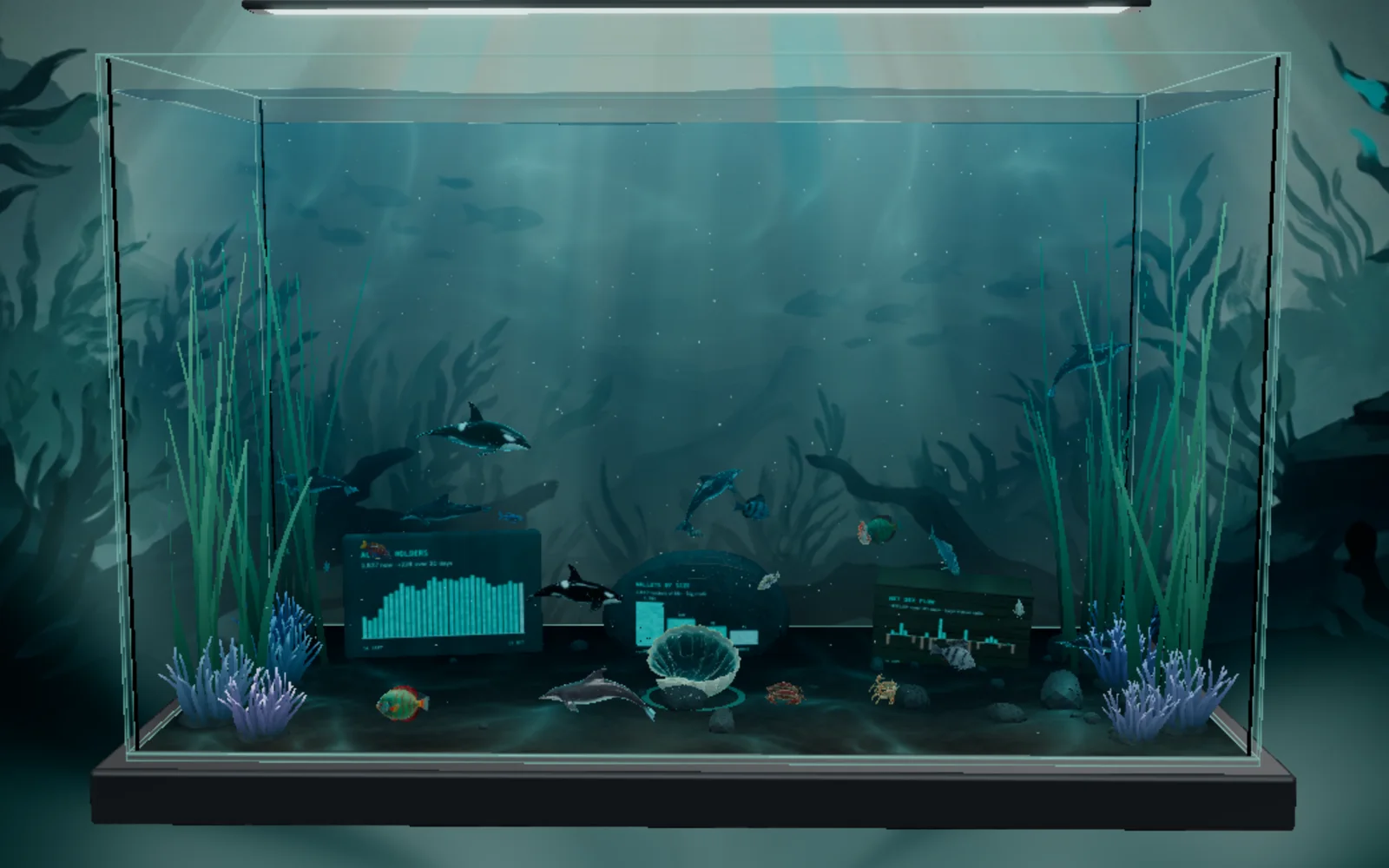
How Blocktronics draws a token's holders as a tank of fish, rule by rule, and how to build your own with your AI agent and the Blocktronics MCP.